


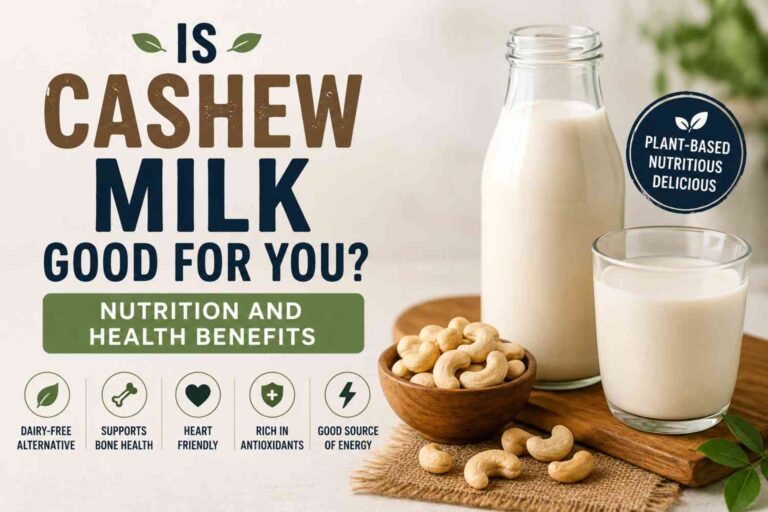
Plant-based milk has become a regular part of many kitchens, whether someone follows a vegan diet, has lactose intolerance, or simply wants to try something different. Among the growing list of dairy alternatives, cashew milk has earned attention for its smooth texture, mild flavour, and versatility. It blends easily into coffee, breakfast cereals, smoothies, and even cooking, making it a convenient option for everyday use.
A common question people ask is, “Is cashew milk good for you?” The answer depends on the type of cashew milk you choose and how it fits into your overall diet. While it offers several nutritional benefits, it also differs from dairy milk in important ways. Understanding its nutrition, benefits, and limitations can help you decide whether it deserves a place in your daily routine.
Cashew milk is a plant-based beverage made by blending cashews with water and then straining the mixture to create a smooth drink. Commercial varieties may also include vitamins, minerals, stabilizers, or natural flavours depending on the brand.
Homemade cashew milk usually contains only cashews and water, giving people complete control over the ingredients. Because of its naturally creamy consistency, it has become one of the preferred dairy alternatives for both drinking and cooking.
The nutritional profile of cashew milk varies depending on whether it is homemade or store-bought.
Unsweetened varieties generally contain:
Many packaged versions are also fortified with calcium and Vitamin D to provide nutrients commonly found in cow’s milk.
Reading the nutrition label remains important because added sugar and flavourings can significantly change the nutritional value.
One of the biggest reasons people choose cashew milk is because it contains no dairy. Individuals with lactose intolerance or those avoiding dairy products often find it easier to digest than regular milk.
Since it contains no lactose, it can be a suitable option for people who experience bloating or digestive discomfort after consuming dairy.
Unsweetened cashew milk is generally lower in calories than whole milk. This makes it attractive for people trying to manage calorie intake while still enjoying a creamy beverage.
However, calorie content increases in sweetened or flavoured versions, making label reading an important habit.
Cashews naturally provide unsaturated fats, which are commonly included in balanced eating patterns.
Unlike foods high in trans fats or excessive saturated fats, cashew milk offers fats that fit more comfortably into a varied diet when consumed in moderation.
Replacing sugary beverages or high-fat dairy products with unsweetened cashew milk may support healthier eating choices.
While no single food protects heart health on its own, choosing beverages with lower saturated fat can contribute to an overall balanced dietary pattern.
Cashews naturally contain minerals such as magnesium and copper.
These nutrients contribute to several normal body functions, including:
Commercial fortified products may also contain additional calcium and Vitamin D.
Cashew milk fits naturally into many everyday meals.
Popular uses include:
Its neutral flavour allows it to blend into recipes without overpowering other ingredients.
So, is cashew milk good for you? For many people, the answer is yes. It offers a creamy, dairy-free alternative that is naturally low in saturated fat and can fit comfortably into a balanced eating pattern. Unsweetened varieties are particularly useful for those looking to reduce added sugars while still enjoying a versatile plant-based beverage.
Like any food, cashew milk works best as part of an overall healthy diet rather than as a standalone solution. Paying attention to ingredients, choosing unsweetened or fortified options when appropriate, and balancing it with other nutrient-rich foods can help you enjoy its benefits while meeting your nutritional needs.
1. Is cashew milk healthier than dairy milk?
It depends on your nutritional needs, but unsweetened cashew milk is lower in calories and naturally lactose-free.
2. Does cashew milk contain protein?
Yes, but it contains less protein than cow’s milk.
3. Can people with lactose intolerance drink cashew milk?
Yes, cashew milk is naturally free from lactose.
4. Is cashew milk good for weight loss?
Unsweetened cashew milk may support weight management as part of a balanced diet because it is generally lower in calories.
5. Can I use cashew milk for cooking?
Yes, cashew milk works well in smoothies, coffee, soups, sauces, baking, and many everyday recipes.
All products are guaranteed to arrive in perfect condition at the specified shipping address provided. If you are not completely satisfied with the quality of your order upon arrival, please contact info@primenut.ae within 48 hours of order receipt, with a detailed description and photograph(s), for a replacement or exchange claim. Due to the perishable nature of our products, all requests submitted without proper supporting documents will not be eligible for re-shipment. Primenut reserves the right to limit replacements.
Primenut is not responsible for failed deliveries when:
An incorrect or outdated address is provided The recipient is not available An amended/new delivery address is not provided within 24 hours of the first delivery attempt Orders that are returned or diverted due to incorrect addresses, will be subject to additional charges based on the courier in the destination country.
All replacement requests must be made within 48 hours of order receipt, by contacting our customer care team at customercare@bateel.com Once the request has been received and approved, the replacement item(s) will be shipped within 2-5 working days. In case a replacement is not possible, a refund will be issued through the original payment method. Refunds can take from 10 to 30 working days to be reflected in your account. For a replacement or refund to be issued, at least one of the following conditions must apply:
The product has been damaged during delivery The product is defective or out of date The incorrect product was shipped
Primenut utilizes priority shipping to deliver your order within 2-5 working days. All orders are processed within 24 hours of order acceptance (Monday to Saturday, excluding holidays). You will receive a Shipment Confirmation email once your order has shipped containing your tracking number(s).
Primenut has a variable shipping fee depending on the delivery destination and size of the order. To find out exact shipping costs, please add your desired items into the cart and indicate delivery address to your basket. The final shipping fee will be calculated at the checkout.
Orders may be subject to import duties, VAT, taxes and customs clearance charges of the destination country. These additional charges, if any, are the sole responsibility of the customer. Primenut cannot be held accountable for charges incurred during the delivery of your order/package. Delivery delays may occur if your package is selected for inspection by your country’s Customs Department or Agency. In case of any exchange/cancellation queries, kindly go through our Returns & Refunds page. For multiple delivery enquiries, kindly send an email to info@primenut.ae