


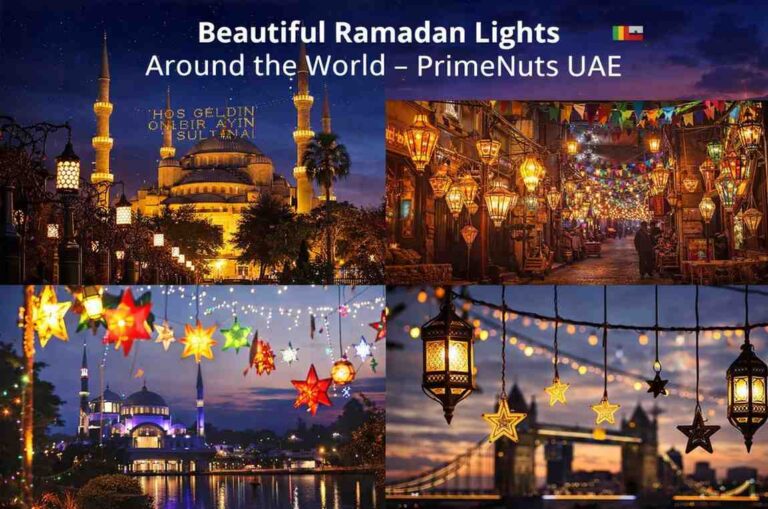
Ramadan is a holy month observed by Muslims worldwide. It is a time of fasting, prayer, patience, and reflection. Along with spiritual practices, Ramadan is also marked by gentle visual traditions, especially the use of lights. From homes and streets to mosques and public spaces, Ramadan lights bring a calm and welcoming atmosphere to evenings after sunset. These lights are not only decorative but also meaningful, reflecting unity, faith, and togetherness.
In countries like Egypt, the famous lantern is an iconic symbol of Ramadan. Traditionally made from metal and coloured glass, these lanterns date back centuries. Children often carry them through streets while singing Ramadan songs, making the lantern both a cultural and emotional symbol of the holy month.
In parts of India, Pakistan, and Bangladesh, handmade lamps and string lights are used to decorate homes and mosques. These decorations often combine Islamic patterns with regional artistic styles, reflecting a blend of faith and local craftsmanship.
Major cities across the world now embrace Ramadan with large-scale light installations. Streets are adorned with crescent moons, stars, and Arabic calligraphy lit in warm tones. Public spaces and shopping districts often feature thematic lighting that reflects the essence of Ramadan while maintaining a respectful and calm atmosphere.
Mosques become focal points during Ramadan, with soft lighting highlighting domes, minarets, and arches. These lights enhance the architectural beauty of mosques and create a serene environment for night prayers such as Taraweeh.
In Gulf countries, Ramadan lights are elegant and expansive. Entire streets and neighbourhood glow with coordinated lighting designs. Decorations often include Islamic geometric patterns, lantern motifs, and welcoming messages that reflect generosity and unity.
Countries like Malaysia and Indonesia decorate mosques and public areas with colourful lights, blending tradition with modern design. Community centres often organize lighting events to bring people together during evening prayers and gatherings.
In cities with diverse populations, Ramadan lights are increasingly visible. Community-led initiatives decorate streets and public squares, promoting cultural understanding and inclusivity. These displays help share the spirit of Ramadan with people from all backgrounds.
Many families decorate their homes with string lights, lanterns, and candles to create a peaceful environment. Balconies, windows, and prayer areas are often softly lit to enhance the feeling of calm during evening prayers and reflection.
Lighting in homes is often kept warm and gentle rather than bright. This approach aligns with the reflective nature of Ramadan, helping families focus on worship, gratitude, and togetherness rather than extravagance.
Ramadan is a time when daily routines shift, with evenings becoming more active. Lights play an important role in shaping this experience. They guide people to mosques, highlight communal spaces, and create a welcoming environment for gatherings after sunset. The visual beauty of Ramadan lighting adds joy without distracting from the month’s spiritual focus.
Beautiful Ramadan lights around the world reflect the diversity and unity of Muslim communities. Whether through traditional lanterns, modern city displays, or simple home decorations, these lights symbolize faith, hope, and togetherness. Across cultures and regions, Ramadan lighting continues to evolve while preserving its deeper meaning. More than decoration, these lights illuminate the values of reflection, generosity, and community that define the holy month of Ramadan.
1. Why are lights used during Ramadan?
Lights symbolise guidance, peace, and togetherness during the holy month.
2. What are traditional Ramadan lights called?
In many regions, they are called famous lanterns.
3. Do all countries decorate with Ramadan lights?
Styles vary, but many Muslim communities use lights in homes and public spaces.
4. Are Ramadan lights used only for decoration?
No, they also help create a calm environment for prayer and gatherings.
5. Can simple lights be used at home for Ramadan?
Yes, soft and simple lighting is commonly used in homes.
All products are guaranteed to arrive in perfect condition at the specified shipping address provided. If you are not completely satisfied with the quality of your order upon arrival, please contact info@primenut.ae within 48 hours of order receipt, with a detailed description and photograph(s), for a replacement or exchange claim. Due to the perishable nature of our products, all requests submitted without proper supporting documents will not be eligible for re-shipment. Primenut reserves the right to limit replacements.
Primenut is not responsible for failed deliveries when:
An incorrect or outdated address is provided The recipient is not available An amended/new delivery address is not provided within 24 hours of the first delivery attempt Orders that are returned or diverted due to incorrect addresses, will be subject to additional charges based on the courier in the destination country.
All replacement requests must be made within 48 hours of order receipt, by contacting our customer care team at customercare@bateel.com Once the request has been received and approved, the replacement item(s) will be shipped within 2-5 working days. In case a replacement is not possible, a refund will be issued through the original payment method. Refunds can take from 10 to 30 working days to be reflected in your account. For a replacement or refund to be issued, at least one of the following conditions must apply:
The product has been damaged during delivery The product is defective or out of date The incorrect product was shipped
Primenut utilizes priority shipping to deliver your order within 2-5 working days. All orders are processed within 24 hours of order acceptance (Monday to Saturday, excluding holidays). You will receive a Shipment Confirmation email once your order has shipped containing your tracking number(s).
Primenut has a variable shipping fee depending on the delivery destination and size of the order. To find out exact shipping costs, please add your desired items into the cart and indicate delivery address to your basket. The final shipping fee will be calculated at the checkout.
Orders may be subject to import duties, VAT, taxes and customs clearance charges of the destination country. These additional charges, if any, are the sole responsibility of the customer. Primenut cannot be held accountable for charges incurred during the delivery of your order/package. Delivery delays may occur if your package is selected for inspection by your country’s Customs Department or Agency. In case of any exchange/cancellation queries, kindly go through our Returns & Refunds page. For multiple delivery enquiries, kindly send an email to info@primenut.ae