
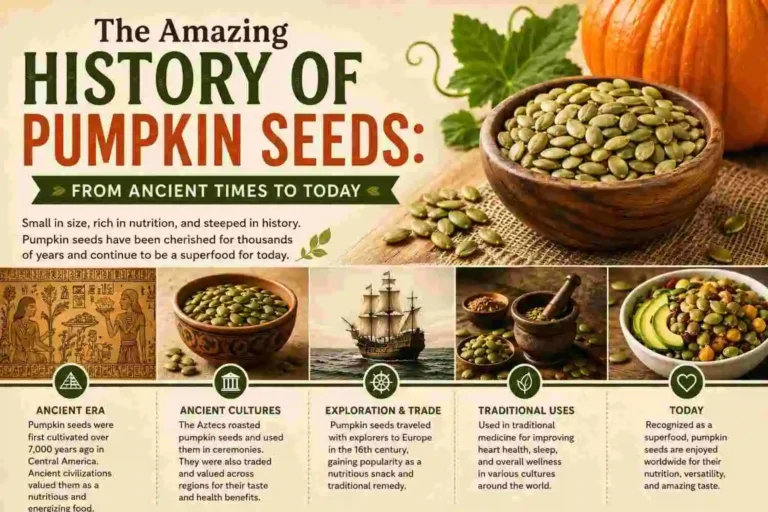
Pumpkin seeds may look like a simple snack today, but their story goes back thousands of years. Long before packaged seeds appeared on supermarket shelves, people were growing pumpkins and using different parts of the plant for food and everyday purposes.
The history of pumpkin seeds is closely connected with the long history of pumpkins in the Americas. Over time, pumpkin seeds moved from traditional food cultures into kitchens around the world, where they are now eaten roasted, added to recipes, or enjoyed as a simple snack.
Pumpkins belong to the Cucurbita group of plants, which has a long history in the Americas. Archaeological evidence shows that different squash and pumpkin species were cultivated by Indigenous peoples thousands of years ago.
The exact history is not as simple as pointing to one place and saying that pumpkins began there. Several species of Cucurbita were domesticated at different times and in different regions.
This makes the origin of pumpkin seeds part of a much larger story about the development of agriculture in the Americas.
Pumpkin and squash plants were important food crops for many Indigenous communities. Their seeds were useful because they could be collected, dried and stored.
Seeds also offered something valuable to traditional food systems: they were small, portable and could be kept for later use.
Different communities developed their own ways of preparing pumpkin and squash. Seeds could be eaten, roasted or incorporated into traditional foods, depending on the region and culture.
The importance of squash and pumpkin went beyond the seeds themselves.
In many Indigenous agricultural traditions, squash was grown alongside other important crops. In parts of North America, squash was associated with the agricultural system commonly known as the Three Sisters, together with maize and beans.
The three crops complemented each other in the field. Maize provided a structure for climbing beans, beans contributed nitrogen to the soil, and squash spread along the ground, helping cover the soil.
Pumpkin and squash seeds were part of this broader food tradition, showing how useful these plants could be from root to seed.
As pumpkins and squash spread beyond their original growing regions, their seeds also became part of different food traditions.
People began using pumpkin seeds in ways that suited local cooking styles. Roasting became one familiar method, while seeds could also be added to breads, salads, sauces and other dishes.
In Mexico, for example, pumpkin seeds are known as pepitas and have an established place in traditional cooking.
The word “pepita” is commonly used for the edible seed or kernel of a pumpkin or squash.
You may have seen the word pepitas when buying pumpkin seeds.
Pepitas are usually the green, shell-free kernels found inside certain pumpkins and squash. They are different from the whole white pumpkin seeds that still have their outer shell.
This distinction is useful when shopping or cooking because the two forms can have different textures and uses.
Whole pumpkin seeds can be roasted and eaten with their shells, while pepitas can be added directly to recipes.
Today, pumpkin seeds are no longer limited to traditional dishes. They have become a familiar ingredient in many modern kitchens.
You can find them in:
Their mild nutty flavour and crunchy texture make them easy to combine with both sweet and savoury foods.
One reason pumpkin seeds have stayed relevant is their practicality.
They are easy to store, simple to prepare and versatile in cooking. They can be eaten by themselves or used to add texture to another dish.
Modern interest in whole foods has also brought more attention to seeds such as pumpkin seeds, sunflower seeds, chia seeds and flaxseeds.
Rather than being used only as a traditional food, pumpkin seeds are now commonly included in everyday snack and meal ideas.
The nutritional value of pumpkin seeds is another reason they attract attention today.
Pumpkin seeds provide protein, fibre, unsaturated fats, magnesium, zinc and other nutrients. The exact nutritional profile can vary depending on the type of seed and how it is prepared.
For example, plain pumpkin seeds and heavily salted roasted seeds are not the same from a dietary perspective.
If you are adding pumpkin seeds to your daily diet, a suitable portion and variety of foods are more important than treating them as a single “superfood.”
The terms can sometimes be confusing.
Whole Pumpkin Seeds
These usually include the outer shell or hull. They can be roasted and eaten as a crunchy snack.
Pepitas
These are the green kernels without the hard outer shell. They are convenient for cooking and can be eaten directly or added to recipes.
Both can be useful, but the texture and preparation are different.
The history of pumpkin seeds shows how a traditional food can remain relevant for thousands of years. From early cultivation of squash in the Americas to their use in traditional cuisines and modern recipes, pumpkin seeds have travelled a long way.
Today, they are appreciated for more than their history. Their crunchy texture, mild flavour, versatility and nutritional value make them easy to include in everyday meals.
From their ancient roots in the Americas to their place in modern kitchens, pumpkin seeds have a history that is much bigger than their size suggests. They were part of traditional food systems long before they became a popular packaged snack. Today, pumpkin seeds continue to be valued for their flavor, texture, versatility and nutritional qualities. Whether you choose whole roasted seeds or shell-free pepitas, this small food remains connected to a long and interesting agricultural history.
1. Where did pumpkin seeds originate?
Pumpkin seeds originated in the Americas, where different pumpkin and squash species were cultivated thousands of years ago.
2. How long have people been eating pumpkin seeds?
People have used pumpkin and squash seeds as food for thousands of years.
3. What are pepitas?
Pepitas are shell-free pumpkin or squash seed kernels that can be eaten raw, roasted or used in cooking.
4. Are pumpkin seeds nutritious?
Yes, pumpkin seeds provide protein, fibre, unsaturated fats, magnesium and zinc.
5. How can I eat pumpkin seeds?
You can eat pumpkin seeds as a snack or add them to yoghurt, oatmeal, salads, soups and trail mixes.
All products are guaranteed to arrive in perfect condition at the specified shipping address provided. If you are not completely satisfied with the quality of your order upon arrival, please contact info@primenut.ae within 48 hours of order receipt, with a detailed description and photograph(s), for a replacement or exchange claim. Due to the perishable nature of our products, all requests submitted without proper supporting documents will not be eligible for re-shipment. Primenut reserves the right to limit replacements.
Primenut is not responsible for failed deliveries when:
An incorrect or outdated address is provided The recipient is not available An amended/new delivery address is not provided within 24 hours of the first delivery attempt Orders that are returned or diverted due to incorrect addresses, will be subject to additional charges based on the courier in the destination country.
All replacement requests must be made within 48 hours of order receipt, by contacting our customer care team at customercare@bateel.com Once the request has been received and approved, the replacement item(s) will be shipped within 2-5 working days. In case a replacement is not possible, a refund will be issued through the original payment method. Refunds can take from 10 to 30 working days to be reflected in your account. For a replacement or refund to be issued, at least one of the following conditions must apply:
The product has been damaged during delivery The product is defective or out of date The incorrect product was shipped
Primenut utilizes priority shipping to deliver your order within 2-5 working days. All orders are processed within 24 hours of order acceptance (Monday to Saturday, excluding holidays). You will receive a Shipment Confirmation email once your order has shipped containing your tracking number(s).
Primenut has a variable shipping fee depending on the delivery destination and size of the order. To find out exact shipping costs, please add your desired items into the cart and indicate delivery address to your basket. The final shipping fee will be calculated at the checkout.
Orders may be subject to import duties, VAT, taxes and customs clearance charges of the destination country. These additional charges, if any, are the sole responsibility of the customer. Primenut cannot be held accountable for charges incurred during the delivery of your order/package. Delivery delays may occur if your package is selected for inspection by your country’s Customs Department or Agency. In case of any exchange/cancellation queries, kindly go through our Returns & Refunds page. For multiple delivery enquiries, kindly send an email to info@primenut.ae