


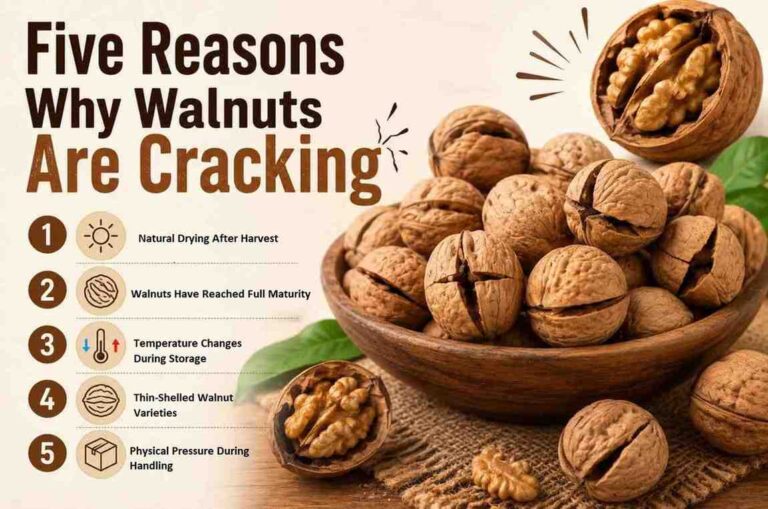
Have you ever picked up a walnut and noticed small cracks on its shell? Many people assume cracked walnuts are damaged or old, but that is not always the case. In fact, walnuts can crack for several natural reasons, and some of them are actually signs that the nut has matured properly.
Walnuts are enjoyed around the world for their rich taste, crunchy texture, and nutritional value. Whether added to breakfast bowls, baked into desserts, or eaten as a snack, they remain a popular choice among people looking for healthy nuts. Understanding why walnuts crack can help consumers choose and store them better.
Let’s look at five common reasons why walnuts are cracking and what it means for the quality of the nut inside.
One of the most common reasons walnuts cracks is the natural drying process.
After walnuts are harvested, they contain moisture inside the shell. As the moisture slowly evaporates, the shell begins to shrink slightly. This natural change can create small cracks on the outer shell.
This is especially common when walnuts are dried in warm conditions after harvesting. In many cases, these small cracks do not affect the taste or quality of the walnut kernel.
Why It Happens
Natural drying is a normal part of walnut processing and does not automatically indicate poor quality.
A walnut tree produces nuts that develop over several months. As the nut reaches maturity, the shell hardens and the outer husk begins to split.
During this stage, pressure builds naturally around the shell. Some walnuts may develop visible cracks as they complete the ripening process.
Farmers often see this as a sign that the walnuts are ready for harvesting.
Signs of Mature Walnuts
Mature walnuts generally offer better texture and flavour than nuts harvested too early.
Walnuts shells respond to changes in temperature.
When walnuts are exposed to fluctuating temperatures, the shell expands and contracts slightly. Over time, repeated temperature changes may create tiny cracks.
This is more likely to happen when walnuts are moved between warm and cool environments during transportation or storage.
Common Storage Conditions That Cause Cracking
Proper storage helps reduce unnecessary shell damage and keeps walnuts fresh longer.
Not all walnuts have the same shell thickness.
Some walnut varieties naturally produce thinner shells. These shells are easier to crack and may develop small openings more frequently than thick-shelled varieties.
Many consumers actually prefer thin-shelled walnuts because they are easier to open and provide better access to the kernel.
Benefits of Thin-Shelled Walnuts
A thin shell does not mean the walnut is low quality. It is often simply a characteristic of the variety.
Walnuts travel through several stages before reaching consumers.
They are harvested, cleaned, sorted, packed, transported, and stored. During any of these steps, physical pressure can cause minor shell cracks.
If cartons are stacked heavily or walnuts experience rough handling, the shell may crack while the kernel remains perfectly edible.
Examples of Handling Pressure
Minor shell cracking caused by handling is fairly common in the walnut industry.
Walnuts can crack for several reasons, including natural drying, maturity, temperature changes, thin shell varieties, and handling during transport. In most cases, small cracks are a normal part of the walnut’s journey from the tree to your kitchen. Understanding these causes helps consumers make informed choices and avoid mistaking naturally cracked walnuts for poor-quality nuts. Besides their unique texture and taste, walnuts remain a popular choice for people looking to include healthy nuts in their daily diet.
1. Is it safe to eat cracked walnuts?
Yes. If the walnut kernel looks fresh and has no signs of mold or spoilage, it is generally safe to eat.
2. Do cracked walnuts mean they are old?
No. Walnuts can crack naturally during drying, storage, or transportation, even when they are fresh.
3. Why do walnut shells crack after harvest?
As moisture leaves the shell during drying, the shell may shrink slightly and develop small cracks.
4. Are thin-shelled walnuts better?
Many people prefer thin-shelled walnuts because they are easier to open and use in recipes.
5. How should walnuts be stored to prevent cracking?
Store walnuts in a cool, dry place and avoid sudden temperature changes to help maintain their quality.
All products are guaranteed to arrive in perfect condition at the specified shipping address provided. If you are not completely satisfied with the quality of your order upon arrival, please contact info@primenut.ae within 48 hours of order receipt, with a detailed description and photograph(s), for a replacement or exchange claim. Due to the perishable nature of our products, all requests submitted without proper supporting documents will not be eligible for re-shipment. Primenut reserves the right to limit replacements.
Primenut is not responsible for failed deliveries when:
An incorrect or outdated address is provided The recipient is not available An amended/new delivery address is not provided within 24 hours of the first delivery attempt Orders that are returned or diverted due to incorrect addresses, will be subject to additional charges based on the courier in the destination country.
All replacement requests must be made within 48 hours of order receipt, by contacting our customer care team at customercare@bateel.com Once the request has been received and approved, the replacement item(s) will be shipped within 2-5 working days. In case a replacement is not possible, a refund will be issued through the original payment method. Refunds can take from 10 to 30 working days to be reflected in your account. For a replacement or refund to be issued, at least one of the following conditions must apply:
The product has been damaged during delivery The product is defective or out of date The incorrect product was shipped
Primenut utilizes priority shipping to deliver your order within 2-5 working days. All orders are processed within 24 hours of order acceptance (Monday to Saturday, excluding holidays). You will receive a Shipment Confirmation email once your order has shipped containing your tracking number(s).
Primenut has a variable shipping fee depending on the delivery destination and size of the order. To find out exact shipping costs, please add your desired items into the cart and indicate delivery address to your basket. The final shipping fee will be calculated at the checkout.
Orders may be subject to import duties, VAT, taxes and customs clearance charges of the destination country. These additional charges, if any, are the sole responsibility of the customer. Primenut cannot be held accountable for charges incurred during the delivery of your order/package. Delivery delays may occur if your package is selected for inspection by your country’s Customs Department or Agency. In case of any exchange/cancellation queries, kindly go through our Returns & Refunds page. For multiple delivery enquiries, kindly send an email to info@primenut.ae