

Nuts and seeds are often grouped together because they are both nutrient-dense foods commonly enjoyed as snacks or added to meals. They provide healthy fats, protein, fibre, vitamins, minerals, and antioxidants, making them valuable additions to a balanced diet. However, despite their similarities, nuts and seeds are not the same. They differ in how they grow, their botanical classification, nutritional composition, and culinary uses.
Understanding the difference between nuts and seeds can help you make informed food choices and enjoy a wider variety of nutrients. This guide explains their key differences, nutritional value, health benefits, and practical ways to include both in your daily diet.
Botanically, a nut is a hard-shelled fruit that contains a single edible kernel. The shell does not naturally split open when mature, protecting the seed inside.
Some commonly eaten nuts include:
Interestingly, some foods we commonly call nuts, such as peanuts and cashews, are technically legumes or seeds. However, because they have similar nutritional profiles and culinary uses, they are generally grouped with tree nuts.
Seeds are the reproductive part of a plant. They develop inside fruits or flowers and can grow into new plants under suitable conditions.
Popular edible seeds include:
Seeds can be eaten whole, roasted, soaked, or ground into powders and spreads.
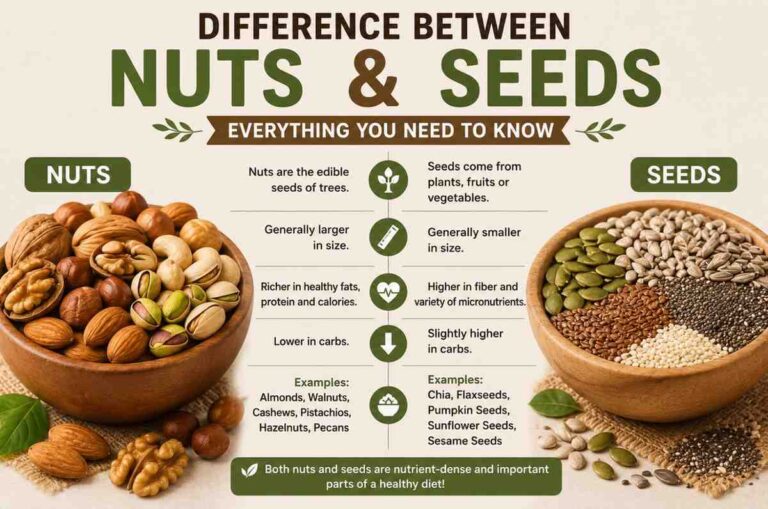
Although nuts and seeds are both nutritious, they differ in several important ways.
| Feature | Nuts | Seeds |
| Botanical origin | Hard-shelled fruits | Reproductive part of plants |
| Structure | Usually enclosed in a hard shell | Found inside fruits or flowers |
| Healthy fats | Rich in monounsaturated fats | Often higher in omega-3 or omega-6 fats |
| Fiber | Good source | Often slightly higher in fiber |
| Common examples | Almonds, walnuts, hazelnuts | Pumpkin, chia, flax, sunflower |
Despite these differences, both contribute valuable nutrients to a healthy diet.
One of the biggest differences between nuts and seeds lies in their nutrient profiles.
Walnuts are also an excellent source of plant-based omega-3 fatty acids (ALA).
Each variety has its own nutritional strengths, making diversity more beneficial than relying on one type alone.
Regularly eating nuts as part of a balanced diet may support overall health.
Potential benefits include:
Because nuts are energy-dense, moderate portions are recommended.
Seeds also offer numerous nutritional advantages.
Benefits may include:
Seeds can also add texture and nutrition to meals without significantly changing their flavour.
A common question is whether nuts or seeds are the healthier option.
The answer is neither. Both provide different nutrients that complement each other.
For example:
Including a variety of nuts and seeds in your diet allows you to benefit from a broader range of nutrients.
Yes. Most healthy adults can enjoy nuts and seeds daily as part of a balanced eating pattern.
A serving of approximately 28–30 grams (one handful) is commonly recommended.
Eating appropriate portions helps you gain nutritional benefits while managing overall calorie intake. Individuals with allergies or certain medical conditions should follow guidance from their healthcare provider.
Adding nuts and seeds to everyday meals is simple.
You can:
Rotating different varieties throughout the week provides greater nutritional diversity.
When buying nuts and seeds:
Store them in airtight containers away from heat and moisture. Refrigeration or freezing helps preserve freshness, especially because their healthy oils can become rancid over time.
Understanding the difference between nuts and seeds helps you appreciate the unique nutritional qualities of each. While nuts are generally known for their healthy fats, vitamin E, and satisfying texture, seeds often provide additional fibre, omega-3 fatty acids, and essential minerals. Neither is better than the other, and both can play an important role in a balanced diet.
Instead of choosing one over the other, include a variety of nuts and seeds in your meals and snacks. This simple habit can increase your intake of beneficial nutrients, add flavour and texture to everyday foods, and support overall health as part of a well-rounded eating pattern.
1. What is the difference between nuts and seeds?
Nuts are hard-shelled fruits, while seeds are the edible parts that grow inside fruits or plants. Both are nutritious but differ in botanical origin.
2. Are nuts and seeds the same?
No. They are different botanically, but both are rich in healthy fats, protein, fibre, vitamins, and minerals.
3. Which is healthier, nuts or seeds?
Both are healthy. Nuts are rich in healthy fats and vitamin E, while seeds often provide more fibre and omega-3 fatty acids.
4. Can you eat nuts and seeds every day?
Yes. Most healthy adults can enjoy a handful (28–30 grams) daily as part of a balanced diet.
5. What are the nutritional differences between nuts and seeds?
Nuts generally contain more healthy fats and vitamin E, while seeds are often higher in fibre, omega-3s, and minerals like magnesium and zinc.
6. Are seeds healthier than nuts?
No. Both offer different nutrients and health benefits. Eating a variety of both is the best choice.
7. Which nuts and seeds are best for heart health?
Walnuts, almonds, pistachios, chia seeds, flaxseeds, and pumpkin seeds are excellent choices for supporting heart health.
8. How much nuts and seeds should you eat daily?
A serving of about 28–30 grams (one handful) per day is suitable for most adults.
All products are guaranteed to arrive in perfect condition at the specified shipping address provided. If you are not completely satisfied with the quality of your order upon arrival, please contact info@primenut.ae within 48 hours of order receipt, with a detailed description and photograph(s), for a replacement or exchange claim. Due to the perishable nature of our products, all requests submitted without proper supporting documents will not be eligible for re-shipment. Primenut reserves the right to limit replacements.
Primenut is not responsible for failed deliveries when:
An incorrect or outdated address is provided The recipient is not available An amended/new delivery address is not provided within 24 hours of the first delivery attempt Orders that are returned or diverted due to incorrect addresses, will be subject to additional charges based on the courier in the destination country.
All replacement requests must be made within 48 hours of order receipt, by contacting our customer care team at customercare@bateel.com Once the request has been received and approved, the replacement item(s) will be shipped within 2-5 working days. In case a replacement is not possible, a refund will be issued through the original payment method. Refunds can take from 10 to 30 working days to be reflected in your account. For a replacement or refund to be issued, at least one of the following conditions must apply:
The product has been damaged during delivery The product is defective or out of date The incorrect product was shipped
Primenut utilizes priority shipping to deliver your order within 2-5 working days. All orders are processed within 24 hours of order acceptance (Monday to Saturday, excluding holidays). You will receive a Shipment Confirmation email once your order has shipped containing your tracking number(s).
Primenut has a variable shipping fee depending on the delivery destination and size of the order. To find out exact shipping costs, please add your desired items into the cart and indicate delivery address to your basket. The final shipping fee will be calculated at the checkout.
Orders may be subject to import duties, VAT, taxes and customs clearance charges of the destination country. These additional charges, if any, are the sole responsibility of the customer. Primenut cannot be held accountable for charges incurred during the delivery of your order/package. Delivery delays may occur if your package is selected for inspection by your country’s Customs Department or Agency. In case of any exchange/cancellation queries, kindly go through our Returns & Refunds page. For multiple delivery enquiries, kindly send an email to info@primenut.ae