

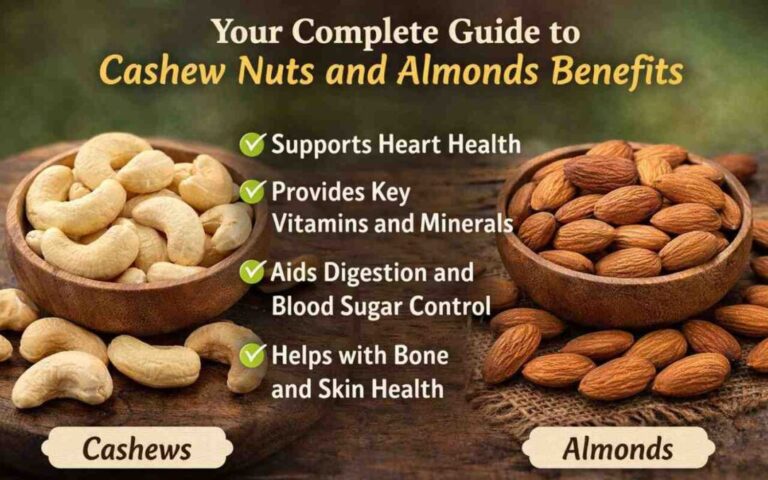
People have eaten nuts for hundreds of years because they are tasty, good for you, and can be used in many ways. There are many different kinds of nuts, but cashews and almonds stand out because they have special nutrients that are beneficial for you in many ways. These two nuts are often grouped together, but they have different health benefits that rely on your lifestyle and dietary needs. This article talks about the health benefits of cashew nuts and almonds, how they are different, and how you can eat both in a healthy way.
Both cashews and almonds are nutrient-dense foods, meaning they provide a high amount of nutrients relative to their calorie content.
Cashew nuts are rich in:
Cashews have a naturally creamy texture and slightly lower fibre compared to almonds, making them easier to digest for some people.
Almonds are known for their:
Almonds are lower in carbohydrates and higher in fibre than cashews, which contributes to slower digestion and longer-lasting fullness.
Cashew nuts contain monounsaturated fats that help maintain healthy cholesterol levels. These fats may support cardiovascular health when consumed as part of a balanced diet.
The combination of protein, healthy fats, and B vitamins in cashews supports energy production and metabolic function. This makes them a useful snack for people with active lifestyles.
Cashews are an excellent source of copper, which plays a role in iron absorption, bone strength, and nervous system health. Magnesium in cashews supports muscle function and helps regulate blood pressure.
Zinc and magnesium in cashews contribute to cognitive function, nerve signalling, and immune health.
Almonds have a lot of dietary fibre, which is good for gut health because it helps digestion and feeds good bugs.
Almonds have vitamin E, which is an antioxidant that helps protect skin cells from damage caused by reactive stress and the environment.
Almond’s fibre, protein, and fat all work together to slow the release of sugar into the bloodstream. This helps keep blood sugar levels stable.
Almonds have three minerals that are very important for keeping bones and teeth strong: calcium, magnesium, and phosphorus.
Cashews are higher in carbohydrates but slightly lower in fibre, while almonds are fibre-rich but lower in carbs. This advantage makes almonds more suitable for people focused on blood sugar control.
Cashews are soft and creamy, and they taste sweet but not too sweet. Almonds are harder and have a somewhat crunchy texture and a nutty taste.
Some people may find almonds heavier because they have more fibre. Soaking cashews makes them simpler to chew and digest, which is why they are frequently easier to eat.
Including both in moderation provides a wider range of nutrients.
Almonds and cashews both provide health benefits that are good for your overall health. Almonds are good for your heart and energy because they provide fibre, antioxidants, and nutrients that help your skin and digestion. Cashews are also good for your heart and energy because they have healthy fats and minerals. A balanced diet with both is more nutritious than choosing one. Knowing how they are different can help you make smart decisions that fit your health goals.
1. Are cashew nuts and almonds healthy?
Yes, both are rich in healthy fats, protein, and essential nutrients.
2. Can I eat cashews and almonds every day?
Yes, eating them in moderation daily is safe and beneficial.
3. Which is healthier, cashews or almonds?
Both are healthy. Almonds are high in fibre, while cashews provide more minerals.
4. Do cashews and almonds help with heart health?
Yes, they support heart health by providing good fats.
5. How many nuts should I eat daily?
About 8–10 cashews or 10–12 almonds per day is enough.
Primenut utilizes priority shipping to deliver your order within 2-5 working days. All orders are processed within 24 hours of order acceptance (Monday to Saturday, excluding holidays). You will receive a Shipment Confirmation email once your order has shipped containing your tracking number(s).
Primenut has a variable shipping fee depending on the delivery destination and size of the order. To find out exact shipping costs, please add your desired items into the cart and indicate delivery address to your basket. The final shipping fee will be calculated at the checkout.
Orders may be subject to import duties, VAT, taxes and customs clearance charges of the destination country. These additional charges, if any, are the sole responsibility of the customer. Primenut cannot be held accountable for charges incurred during the delivery of your order/package. Delivery delays may occur if your package is selected for inspection by your country’s Customs Department or Agency. In case of any exchange/cancellation queries, kindly go through our Returns & Refunds page. For multiple delivery enquiries, kindly send an email to info@primenut.ae
All products are guaranteed to arrive in perfect condition at the specified shipping address provided. If you are not completely satisfied with the quality of your order upon arrival, please contact info@primenut.ae within 48 hours of order receipt, with a detailed description and photograph(s), for a replacement or exchange claim. Due to the perishable nature of our products, all requests submitted without proper supporting documents will not be eligible for re-shipment. Primenut reserves the right to limit replacements.
Primenut is not responsible for failed deliveries when:
An incorrect or outdated address is provided The recipient is not available An amended/new delivery address is not provided within 24 hours of the first delivery attempt Orders that are returned or diverted due to incorrect addresses, will be subject to additional charges based on the courier in the destination country.
All replacement requests must be made within 48 hours of order receipt, by contacting our customer care team at customercare@bateel.com Once the request has been received and approved, the replacement item(s) will be shipped within 2-5 working days. In case a replacement is not possible, a refund will be issued through the original payment method. Refunds can take from 10 to 30 working days to be reflected in your account. For a replacement or refund to be issued, at least one of the following conditions must apply:
The product has been damaged during delivery The product is defective or out of date The incorrect product was shipped