


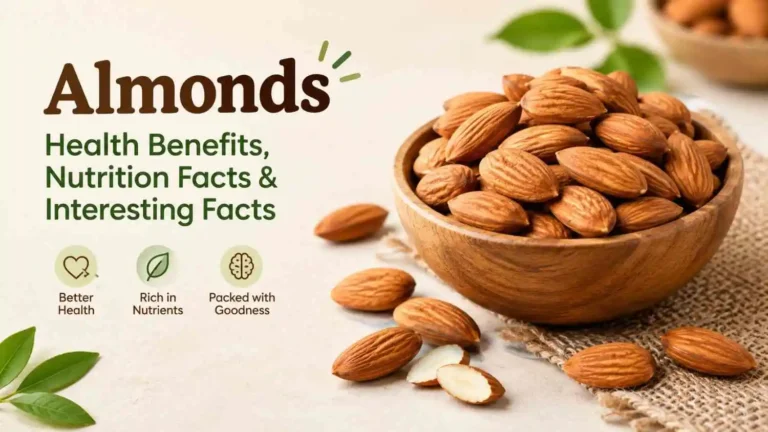
Almonds are one of the most popular nuts around the world. They are easy to add to breakfast, snacks and everyday meals, and they provide a useful combination of protein, fiber, unsaturated fats, vitamins and minerals.
But almonds are more than just a convenient snack. Their nutrition profile has made them a common choice for people looking for simple ways to improve the overall quality of their diet.
In this guide, we look at almond’s nutrition facts, almonds health benefits, how to eat them, and some interesting facts without making exaggerated health claims.
Almonds contain several nutrients that are useful as part of a balanced diet. They provide healthy unsaturated fats along with plant protein and dietary fibre.
They are also a notable source of vitamin E, an antioxidant nutrient, and provide minerals such as magnesium and copper.
The exact nutrition values can vary depending on the type of almond and how it is prepared. Raw or dry-roasted almonds without added ingredients are generally easier to compare than products with added salt, sugar or coatings. USDA FoodData Central is one useful reference for checking food composition data.
A typical small serving of almonds, around 28 grams (1 ounce), provides approximately:
These numbers are approximate and can vary by variety and preparation method. For packaged almonds, always check the nutrition label for the actual product.
One of the main reasons almonds are valued nutritionally is their fat profile. Most of the fat in almonds is unsaturated fat.
Replacing foods high in saturated fat with foods containing unsaturated fats can be part of a heart-friendly eating pattern. Almonds can therefore fit well into a balanced diet when eaten in sensible portions.
Research has also examined almond consumption and cardiovascular risk factors. A systematic review and meta-analysis of randomized controlled trials found that almond consumption was associated with reductions in total cholesterol and LDL cholesterol in the studies reviewed, although the researcher’s noted differences between studies and said firmer conclusions were limited by this variation.
Almonds are particularly well known for their vitamin E content.
Vitamin E functions as an antioxidant in the body and helps protect cells from oxidative damage. Almonds can therefore be a practical food source of this nutrient.
Rather than thinking of one food as providing a complete health solution, it is better to include almonds as one part of a varied diet containing fruits, vegetables, whole grains, legumes and other nutrient-rich foods.
Fibre is another useful part of almond nutrition.
A serving of almonds provides several grams of dietary fibre, which contributes to overall daily fibre intake. Fibre is important for normal digestive health and can also help make a snack more satisfying.
Eating almonds with fruit or yoghurt can be a simple way to create a more filling snack without relying heavily on highly processed foods.
Almonds provide plant-based protein, although they should not be considered a complete replacement for major protein foods in every meal.
Adding a small serving of almonds to breakfast, salads, oatmeal or yoghurt can increase the protein content of the meal while also adding texture and flavour.
For people who regularly eat plant-based foods, nuts can be one useful part of an overall varied protein intake.
Magnesium is involved in many normal functions in the body, including muscle and nerve function and energy metabolism.
Almonds are a useful dietary source of magnesium. However, getting enough magnesium is not about eating one particular food. A varied diet that includes nuts, seeds, whole grains, legumes and vegetables can provide magnesium from several sources.
The relationship between almonds and heart health has been studied extensively.
A systematic review of randomized controlled trials found that almond interventions were associated with improvements in some blood lipid measures, particularly total cholesterol and LDL cholesterol. Another review also concluded that almonds may have a beneficial effect on lipid profiles.
This does not mean that eating almonds prevents heart disease on its own. Overall eating habits, physical activity, body weight, smoking, sleep and other health factors all matter.
Almonds are calorie-dense because they contain a considerable amount of fat. That does not automatically make them a poor choice for people watching their weight.
Their combination of fat, protein and fibre can make a small serving satisfying. Some research has investigated almonds in relation to body weight and body composition, with mixed results depending on the study design and amount consumed.
The practical point is simple: portion size matters. Instead of eating directly from a large packet, measure a small serving and enjoy it alongside other nutritious foods.
There is no need to assume that one preparation method is always best.
Raw almonds have a simple ingredient profile and work well as a snack or as an addition to breakfast and salads.
Dry-roasted almonds provide a stronger roasted flavour and crunchy texture. If you are choosing them regularly, check whether salt, sugar or additional oils have been added.
Soaking almonds is a traditional practice in some households. It can soften the skin and change the texture, making them easier for some people to eat.
However, there is no need to treat soaked almonds as a special health food. The overall quality of your diet matters much more than whether almonds are soaked or not.
There is no single number that is ideal for everyone. A commonly used serving size for nuts is around 28 grams, or approximately a small handful.
Your appropriate portion can depend on your total calorie needs, eating pattern and other foods in your diet.
If you are already eating several nuts and seeds during the day, you may not need a large serving of almonds as well.
Almonds are easy to use without complicated recipes.
The simplest approach is often the most practical: use a small portion of almonds as part of a balanced meal or snack.
If you want almonds mainly for everyday snacking, check the ingredient list before buying.
Plain almonds are usually the simplest choice if you want to avoid unnecessary added ingredients.
For salted almonds, compare the sodium content between products. Flavoured or coated varieties may contain added sugar, oils or other ingredients.
Also look at the package size. Since almonds are energy-dense, buying a large pack does not mean you need to eat a large amount at once.
You do not need to completely change your diet to include almonds.
A small serving with breakfast, a few chopped almonds over yoghurt, or a measured portion as an afternoon snack can be enough.
The bigger benefit comes from replacing less nutritious snack choices with foods that provide useful nutrients. Almonds work particularly well when combined with other whole foods rather than treated as a stand-alone solution for health.
Almonds offer a practical combination of healthy fats, protein, fibre, vitamin E and minerals such as magnesium. These nutrients contribute to the health benefits of almonds and make them a useful addition to a balanced eating pattern.
Research has found potential benefits of almond consumption for some cardiovascular risk factors, particularly blood cholesterol, although results vary across studies. Almonds should not be presented as a treatment or cure for disease.
Whether you choose raw, roasted or soaked almonds, the key is to pay attention to portion size and the ingredients added to the product.
For everyday eating, a small handful of plain almonds can be a simple, crunchy and nutritious snack while helping you enjoy the health benefits of almonds as part of a varied diet.
1. Are almonds healthy?
Yes. Almonds provide healthy unsaturated fats, protein, fibre, vitamin E and minerals, making them a nutritious choice as part of a balanced diet.
2. What are the main health benefits of almonds?
The health benefits of almonds are mainly linked to their healthy fats, fibre, protein, vitamin E and minerals. Research has particularly examined their potential role in supporting healthy blood cholesterol levels.
3. How many almonds should I eat per day?
About 28 grams, or a small handful, is a commonly used serving size. Your ideal portion may vary based on your overall diet and calorie needs.
4. Are almonds high in protein?
Almonds provide about 6 grams of protein per 28-gram serving. They can contribute to your daily protein intake as part of a varied diet.
5. Are soaked almonds healthier than raw almonds?
Not necessarily. Soaking changes the texture and may make almonds easier for some people to eat, but there is no strong evidence that soaked almonds are universally healthier than raw almonds.
Primenut utilizes priority shipping to deliver your order within 2-5 working days. All orders are processed within 24 hours of order acceptance (Monday to Saturday, excluding holidays). You will receive a Shipment Confirmation email once your order has shipped containing your tracking number(s).
Primenut has a variable shipping fee depending on the delivery destination and size of the order. To find out exact shipping costs, please add your desired items into the cart and indicate delivery address to your basket. The final shipping fee will be calculated at the checkout.
Orders may be subject to import duties, VAT, taxes and customs clearance charges of the destination country. These additional charges, if any, are the sole responsibility of the customer. Primenut cannot be held accountable for charges incurred during the delivery of your order/package. Delivery delays may occur if your package is selected for inspection by your country’s Customs Department or Agency. In case of any exchange/cancellation queries, kindly go through our Returns & Refunds page. For multiple delivery enquiries, kindly send an email to info@primenut.ae
All products are guaranteed to arrive in perfect condition at the specified shipping address provided. If you are not completely satisfied with the quality of your order upon arrival, please contact info@primenut.ae within 48 hours of order receipt, with a detailed description and photograph(s), for a replacement or exchange claim. Due to the perishable nature of our products, all requests submitted without proper supporting documents will not be eligible for re-shipment. Primenut reserves the right to limit replacements.
Primenut is not responsible for failed deliveries when:
An incorrect or outdated address is provided The recipient is not available An amended/new delivery address is not provided within 24 hours of the first delivery attempt Orders that are returned or diverted due to incorrect addresses, will be subject to additional charges based on the courier in the destination country.
All replacement requests must be made within 48 hours of order receipt, by contacting our customer care team at customercare@bateel.com Once the request has been received and approved, the replacement item(s) will be shipped within 2-5 working days. In case a replacement is not possible, a refund will be issued through the original payment method. Refunds can take from 10 to 30 working days to be reflected in your account. For a replacement or refund to be issued, at least one of the following conditions must apply:
The product has been damaged during delivery The product is defective or out of date The incorrect product was shipped