

Sunflower seeds are small, crunchy and easy to add to everyday meals. They come from the sunflower plant and are commonly eaten as a snack or used as an ingredient in salads, breakfast dishes and baked foods. Their mild, nsutty flavour makes them easy to combine with other foods.
If you are looking for sunflower seeds nutrition and health benefits, it helps to look at what they actually provide and how they can fit into a regular diet rather than treating them as a special food with instant results.
Sunflower seeds are the edible seeds produced by the sunflower plant. They are available in different forms, including whole seeds with their outer shells and shelled sunflower seed kernels.
Shelled seeds are particularly convenient because they can be eaten directly or added to recipes without additional preparation.
You can find sunflower seeds:
The nutritional profile can vary depending on the variety and how the seeds are prepared.
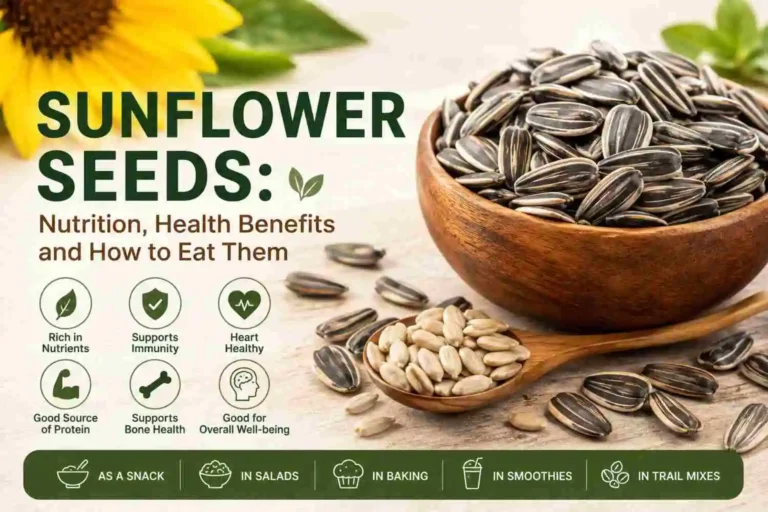
Sunflower seeds provide a combination of healthy fats, protein, fibre, vitamins and minerals. They are particularly known for nutrients such as vitamin E, magnesium and selenium.
They also contain plant-based protein, making them a useful addition to meals and snacks.
Because sunflower seeds are relatively energy-dense, portion size is still worth considering. A small serving can add texture and nutrients without making your snack unnecessarily large.
Some of the nutrients associated with sunflower seeds include:
The exact amounts depend on the product and preparation method, so nutrition labels are useful when comparing different varieties.
Sunflower seeds are a good food source of vitamin E, an antioxidant nutrient that helps protect cells from oxidative damage.
Including different sources of vitamin E in your diet can contribute to overall nutritional balance.
Sunflower seeds contain protein, fats and fibre, so they can make a snack more satisfying than foods that provide very little nutritional value.
They can also be combined with fruits, yoghurt or other nuts and seeds for more variety.
Sunflower seeds provide magnesium, a mineral involved in many normal functions in the body, including muscle and nerve function.
Adding seeds to meals is one simple way to include magnesium-containing foods in your diet.
Most of the fat in sunflower seeds is unsaturated fat. Replacing some sources of saturated fat with unsaturated fat can be part of a heart-conscious eating pattern.
This does not mean that eating more seeds automatically improves heart health. The overall quality of your diet matters more than any single food.
Sunflower seeds provide plant-based protein and can be combined with other foods to create a more varied snack or meal.
They can be especially convenient for people who enjoy including more plant-based foods in their everyday eating habits.
Both raw and roasted sunflower seeds can be enjoyed, but they have different textures and flavors.
Raw sunflower seeds have a mild taste and softer texture.
Roasted sunflower seeds usually have a deeper, toasted flavour and a crunchier texture.
If you are choosing between the two, check the ingredient list. Salted or flavoured varieties may contain additional sodium, oils or other ingredients.
For everyday use, unsalted or lightly salted seeds may be preferable if you are trying to keep your salt intake lower.
There are many simple ways to add sunflower seeds to your routine:
When buying sunflower seeds, look at more than just the package.
Sunflower seeds contain natural oils, so storing them properly helps maintain their quality.
Keep unopened seeds in a cool, dry place away from direct sunlight. After opening, seal the package properly or transfer the seeds to an airtight container.
For longer storage, refrigeration can help maintain freshness, particularly in warm climates. Make sure the seeds are protected from moisture and strong food odours.
Sunflower Seeds can be a practical everyday snack because they are easy to carry and can be eaten without much preparation.
However, they are not something you need to eat in large quantities to get benefits. A suitable portion alongside a varied diet is a more sensible approach.
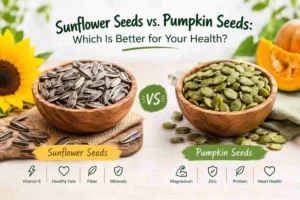
You can also alternate sunflower seeds with almonds, walnuts, pistachios, pumpkin seeds and other nuts and seeds to keep your snacks varied.
Sunflower Seeds Nutrition makes them a useful addition to everyday meals. They provide vitamin E, magnesium, selenium, protein, fiber and unsaturated fats. Sunflower seeds are a simple food that can add variety and crunch to your diet. You can enjoy them raw or roasted and add them to snacks, breakfast dishes, salads and baked foods. Rather than relying on sunflower seeds alone for health benefits, include them as one part of a varied and balanced diet.
1. Are sunflower seeds healthy?
Sunflower seeds provide nutrients including vitamin E, magnesium, selenium, protein, fibre and unsaturated fats. They can be included as part of a balanced diet.
2. Can I eat sunflower seeds every day?
Yes, sunflower seeds can be part of an everyday diet when eaten in a suitable portion and alongside a variety of other foods.
3. Are raw or roasted sunflower seeds better?
Both can fit into a balanced diet. Raw seeds have a milder taste, while roasted seeds have a stronger flavour and crunch. Check added salt and other ingredients when choosing roasted varieties.
4. How can I add sunflower seeds to my diet?
You can eat them as a snack or add them to yoghurt, oatmeal, salads, smoothies, baked foods and trail mixes.
5. Should I choose salted or unsalted sunflower seeds?
Choose unsalted sunflower seeds to limit sodium, or check the nutrition label when buying salted varieties.
All products are guaranteed to arrive in perfect condition at the specified shipping address provided. If you are not completely satisfied with the quality of your order upon arrival, please contact info@primenut.ae within 48 hours of order receipt, with a detailed description and photograph(s), for a replacement or exchange claim. Due to the perishable nature of our products, all requests submitted without proper supporting documents will not be eligible for re-shipment. Primenut reserves the right to limit replacements.
Primenut is not responsible for failed deliveries when:
An incorrect or outdated address is provided The recipient is not available An amended/new delivery address is not provided within 24 hours of the first delivery attempt Orders that are returned or diverted due to incorrect addresses, will be subject to additional charges based on the courier in the destination country.
All replacement requests must be made within 48 hours of order receipt, by contacting our customer care team at customercare@bateel.com Once the request has been received and approved, the replacement item(s) will be shipped within 2-5 working days. In case a replacement is not possible, a refund will be issued through the original payment method. Refunds can take from 10 to 30 working days to be reflected in your account. For a replacement or refund to be issued, at least one of the following conditions must apply:
The product has been damaged during delivery The product is defective or out of date The incorrect product was shipped
Primenut utilizes priority shipping to deliver your order within 2-5 working days. All orders are processed within 24 hours of order acceptance (Monday to Saturday, excluding holidays). You will receive a Shipment Confirmation email once your order has shipped containing your tracking number(s).
Primenut has a variable shipping fee depending on the delivery destination and size of the order. To find out exact shipping costs, please add your desired items into the cart and indicate delivery address to your basket. The final shipping fee will be calculated at the checkout.
Orders may be subject to import duties, VAT, taxes and customs clearance charges of the destination country. These additional charges, if any, are the sole responsibility of the customer. Primenut cannot be held accountable for charges incurred during the delivery of your order/package. Delivery delays may occur if your package is selected for inspection by your country’s Customs Department or Agency. In case of any exchange/cancellation queries, kindly go through our Returns & Refunds page. For multiple delivery enquiries, kindly send an email to info@primenut.ae