


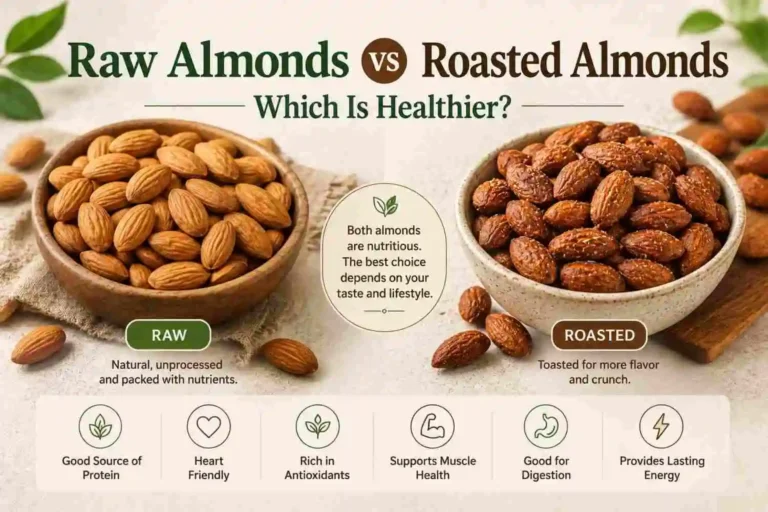
Almonds are an easy snack to keep at home, but choosing between raw and roasted almonds can sometimes be confusing. Both have a crunchy texture and nutty taste, but the way they are prepared is different. Raw almonds vs roasted almonds is less about finding one clear winner and more about understanding how roasting affects taste, texture and the overall eating experience.
Raw almonds are almonds that have not been roasted. They have a firm, natural crunch and a mild nutty flavor.
They are convenient to add to everyday meals and snacks. You can eat them on their own or use them in:
For people who prefer a simple snack without additional preparation, raw almonds are an easy option.
Roasted almonds are heated to develop a deeper flavour and crunchier texture. Roasting can make the almonds taste richer and more aromatic compared with their raw form.
Roasted almonds can be prepared with or without added ingredients. Some varieties are lightly roasted, while others may contain salt, spices or other seasonings.
This is why it is useful to check the product label when comparing different roasted almond products.
The biggest difference is the preparation method.
| Feature | Raw Almonds | Roasted Almonds |
| Texture | Firm and natural | Crisp and crunchy |
| Flavor | Mild, nutty | Deeper, toasted flavour |
| Preparation | Not roasted | Heated during roasting |
| Seasoning | Usually, plain | Can be plain or seasoned |
| Snacking | Simple and convenient | Popular for its stronger flavour |
Neither option has to be completely removed from your diet. Your choice can depend on your taste, eating habits and the type of product you prefer.
Roasting can cause some changes in the nutritional profile of almonds, particularly when they are exposed to heat for longer periods. However, the overall difference depends on factors such as roasting temperature, roasting time and whether ingredients such as salt or oil are added.
Almonds remain a nutrient-rich food after roasting, but the preparation method matters.
For example, plain roasted almonds and salted roasted almonds are not the same product from a dietary perspective. If you are watching your sodium intake, checking the label is especially useful.
It is difficult to say that raw almonds are always healthier.
Raw almonds avoid the heating process and are often available without added salt or oil. Roasted almonds can still be a good snack choice, especially when they are simply roasted without excessive added ingredients.
The better choice depends on what you are looking for.
If you want a plain snack with minimal preparation, raw almonds may suit you. If you prefer a stronger flavour and crunch, plain roasted almonds may be more enjoyable.
Yes, roasted almonds can fit into an everyday eating routine. The important thing is to pay attention to the ingredients and portion size.
When choosing roasted almonds, look for options that match your dietary preferences. Plain roasted almonds are different from heavily salted or flavoured varieties.
A small portion can also be easier to manage than eating directly from a large packet.
Neither raw nor roasted almonds should automatically be considered a weight-loss food. What matters more is your overall diet, portion size and daily energy intake.
Almonds are relatively energy-dense, so eating large amounts can add considerable calories to your diet. Preparing a suitable portion before snacking can help you avoid eating more than intended.
For a practical everyday snack, choose the type you enjoy and can eat in a sensible portion.
There is no universal answer.
Choose raw almonds if you:
Choose roasted almonds if you:
If both fit your eating habits, you can enjoy either one at different times.
Salted roasted almonds are popular because the combination of crunch and salt makes them enjoyable as a snack. However, they contain added sodium, so they may not be the best choice for everyone.
If you are trying to reduce your salt intake, choose unsalted or lightly salted almonds and check the nutrition information on the package.
The same applies to flavoured almonds that contain additional sugar, oils or seasonings.
You don’t have to eat almonds in the same way every day. Try adding them to foods you already enjoy.
For example:
This gives you more variety without making your meals complicated.
When comparing raw almonds vs roasted almonds, there is no single option that is best for everyone. Raw almonds offer a simple, natural choice, while roasted almonds provide a deeper flavour and crunchy texture. If you choose roasted almonds, checking for added salt, sugar or oil can help you find an option that suits your needs. Ultimately, the best almond is one that you enjoy eating regularly as part of a balanced diet.
1. Are raw almonds better than roasted almonds?
Not necessarily. Both can be included in a balanced diet. Raw almonds are unroasted, while roasted almonds have been heated for a different flavour and texture.
2. Do roasted almonds lose their nutritional value?
Roasting can change some nutrients because of heat, but roasted almonds can still be a nutritious food. The amount of change depends on the roasting method and temperature.
3. Can I eat roasted almonds every day?
Roasted almonds can be included in an everyday diet when eaten in a suitable portion. Choose varieties according to your dietary needs, especially if you are monitoring salt or added ingredients.
4. Are unsalted roasted almonds a good option?
Unsalted roasted almonds can be a practical choice if you enjoy roasted flavour and want to avoid additional sodium from salt.
5. Which tastes better, raw or roasted almonds?
This is mainly a personal preference. Raw almonds have a mild, natural nutty taste, while roasted almonds generally have a deeper toasted flavor and crisp texture.
All products are guaranteed to arrive in perfect condition at the specified shipping address provided. If you are not completely satisfied with the quality of your order upon arrival, please contact info@primenut.ae within 48 hours of order receipt, with a detailed description and photograph(s), for a replacement or exchange claim. Due to the perishable nature of our products, all requests submitted without proper supporting documents will not be eligible for re-shipment. Primenut reserves the right to limit replacements.
Primenut is not responsible for failed deliveries when:
An incorrect or outdated address is provided The recipient is not available An amended/new delivery address is not provided within 24 hours of the first delivery attempt Orders that are returned or diverted due to incorrect addresses, will be subject to additional charges based on the courier in the destination country.
All replacement requests must be made within 48 hours of order receipt, by contacting our customer care team at customercare@bateel.com Once the request has been received and approved, the replacement item(s) will be shipped within 2-5 working days. In case a replacement is not possible, a refund will be issued through the original payment method. Refunds can take from 10 to 30 working days to be reflected in your account. For a replacement or refund to be issued, at least one of the following conditions must apply:
The product has been damaged during delivery The product is defective or out of date The incorrect product was shipped
Primenut utilizes priority shipping to deliver your order within 2-5 working days. All orders are processed within 24 hours of order acceptance (Monday to Saturday, excluding holidays). You will receive a Shipment Confirmation email once your order has shipped containing your tracking number(s).
Primenut has a variable shipping fee depending on the delivery destination and size of the order. To find out exact shipping costs, please add your desired items into the cart and indicate delivery address to your basket. The final shipping fee will be calculated at the checkout.
Orders may be subject to import duties, VAT, taxes and customs clearance charges of the destination country. These additional charges, if any, are the sole responsibility of the customer. Primenut cannot be held accountable for charges incurred during the delivery of your order/package. Delivery delays may occur if your package is selected for inspection by your country’s Customs Department or Agency. In case of any exchange/cancellation queries, kindly go through our Returns & Refunds page. For multiple delivery enquiries, kindly send an email to info@primenut.ae