


Parents are constantly searching for snacks that are easy to pack, fun to eat, and nutritious for growing kids. Peanuts have been a family favourite for generations because they’re inexpensive, simple, and versatile. Whether roasted, mixed into homemade trail mix, or made into creamy peanut butter, peanuts for kids are easy to include in everyday meals and snacks. So many parents want to know if they’re a healthy choice for children.
The answer depends on the child’s age, individual dietary needs, and whether or not the child has a peanut allergy. They can be a healthy part of a well-rounded diet for children who can safely eat peanuts. The trick is to serve them in reasonable amounts and in age-appropriate forms, but also to provide a range of other healthy foods, like fruits and vegetables, whole grains and dairy products.
Finding snacks that children will eat can be difficult. Many packaged snacks are quick and simple but may not always be the healthiest option. For children who are able to eat peanuts safely they can be a simple snack option that is easy to have at home, to pack in a lunch box or to take on family outings. They are easy to prepare and can be mixed with fresh fruit or yoghurt for a balanced snack.
Peanuts are a natural source of protein, healthy fats, fibre and some key vitamins and minerals. Rather than eating the same snack every day, parents can mix peanuts with other healthy foods to provide children with some extra variety during the week. The aim is to develop enjoyable eating habits that are easy to maintain and not depend on one food.
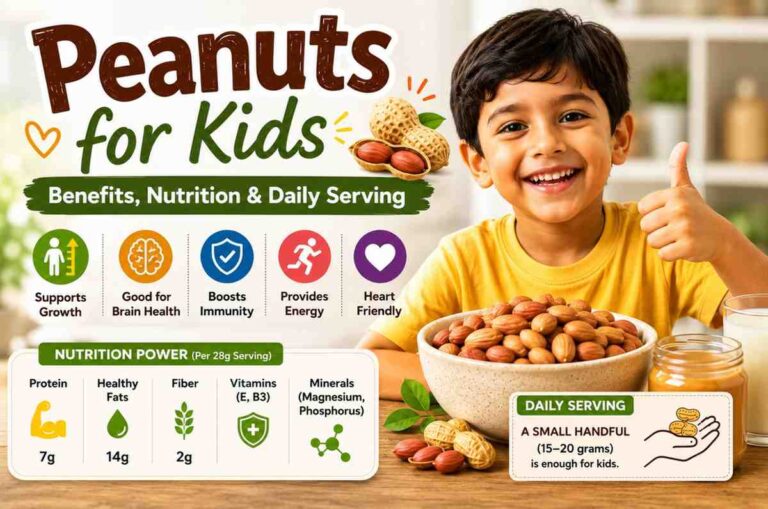
Peanuts naturally contain protein, healthy fats, fibre, and several vitamins and minerals that children need as they grow. They naturally contain plant protein, which helps children to grow normally. They are also a source of healthy unsaturated fats, fibre, and essential vitamins and minerals such as vitamin E, magnesium, phosphorus, folate, and niacin.
Rather than looking at one superfood. It is better to think of peanuts as part of a varied dietary pattern. The more beneficial foods kids eat all week long, including peanuts when it makes sense, the better. Kids need various nutrients to help them grow and develop.
Peanuts can be a healthy snack food for many kids when eaten as part of a well-rounded diet. The combination of protein, healthy fats and fibre helps to make snacks more filling, which could help to reduce the craving to keep snacking on highly processed foods in between meals. Peanuts are also easy to combine with everyday foods like fruit, yoghurt or whole grain crackers, making them a convenient choice for school breaks or after-school snacks.
Children need different nutrients at different ages so it is important to think of peanuts as one element of a well-rounded diet, not the only healthy snack. Providing a variety of nuts, seeds, fruits, vegetables and whole grains throughout the week is a beneficial way to give children a wider spectrum of nutrients.
The right serving depends on a child’s age, appetite, and overall diet. For most school-aged children, a small handful (about 15–20 grams) is usually enough as a snack. Peanuts shouldn’t replace regular meals but can be enjoyed between meals as part of a balanced eating pattern.
Whole peanuts can be a choking hazard for babies and very young children so should not be given to them. A safer option is to introduce younger children to smooth peanut butter or finely ground peanuts in an age-appropriate way. If you’re not sure when or how to introduce peanuts, it is always best to check with your child’s paediatrician or healthcare professional.
Another important consideration is peanut allergy. If your child has an existing peanut allergy or has reacted to eating peanuts then it is best to avoid peanuts and foods that contain peanuts. If you are introducing peanuts for the first time, particularly if your child has severe eczema, other food allergies or a family history of allergy it is best to check with your healthcare professional first. Taking a little extra care in the beginning can make the introduction of peanuts a safe one and one that you can feel confident about.
Adding peanuts to your child’s diet doesn’t have to be complicated. For older children that can safely eat whole nuts, a small handful of roasted peanuts can be packed as a school snack. You could also mix peanuts with raisins or other dried fruits for a simple homemade snack mix. Smooth peanut butter can be spread on whole-grain toast, used as a dip for apple slices, or stirred into oatmeal for added flavor. The easiest way to serve peanuts is in forms your child already likes, just make sure the portion is age-appropriate.
Peanuts can be a convenient and nutritious snack for children when served in suitable portions and in an age-appropriate form. Rather than focusing on one “perfect” food, include peanuts as part of a varied diet that also contains fruits, vegetables, whole grains, dairy foods, and other healthy snacks. Choosing simple, balanced eating habits today can help children develop healthier food choices as they grow.
1. Are peanuts good for kids?
Yes, if they are not allergic to peanuts. Peanuts can be a healthy snack, if they are given in the right form and in proportion to their age.
2. At what age can children eat peanuts?
Peanuts can be introduced in infancy in an age-appropriate form. Whole peanuts should never be given to babies or very young children as they can choke.
3. How many peanuts can kids eat each day?
Most school-age children need only a small handful of peanuts as a snack. The right amount depends on their age, appetite and the rest of their diet.
4. Can kids eat peanuts every day?
Yes, Peanuts can be included regularly, but it is still important to offer different healthy foods throughout the week.
5. Are roasted peanuts better than raw peanuts for kids?
Older children can have plain roasted or raw peanuts, as long as they are served safely and don’t have too much salt added.
All products are guaranteed to arrive in perfect condition at the specified shipping address provided. If you are not completely satisfied with the quality of your order upon arrival, please contact info@primenut.ae within 48 hours of order receipt, with a detailed description and photograph(s), for a replacement or exchange claim. Due to the perishable nature of our products, all requests submitted without proper supporting documents will not be eligible for re-shipment. Primenut reserves the right to limit replacements.
Primenut is not responsible for failed deliveries when:
An incorrect or outdated address is provided The recipient is not available An amended/new delivery address is not provided within 24 hours of the first delivery attempt Orders that are returned or diverted due to incorrect addresses, will be subject to additional charges based on the courier in the destination country.
All replacement requests must be made within 48 hours of order receipt, by contacting our customer care team at customercare@bateel.com Once the request has been received and approved, the replacement item(s) will be shipped within 2-5 working days. In case a replacement is not possible, a refund will be issued through the original payment method. Refunds can take from 10 to 30 working days to be reflected in your account. For a replacement or refund to be issued, at least one of the following conditions must apply:
The product has been damaged during delivery The product is defective or out of date The incorrect product was shipped
Primenut utilizes priority shipping to deliver your order within 2-5 working days. All orders are processed within 24 hours of order acceptance (Monday to Saturday, excluding holidays). You will receive a Shipment Confirmation email once your order has shipped containing your tracking number(s).
Primenut has a variable shipping fee depending on the delivery destination and size of the order. To find out exact shipping costs, please add your desired items into the cart and indicate delivery address to your basket. The final shipping fee will be calculated at the checkout.
Orders may be subject to import duties, VAT, taxes and customs clearance charges of the destination country. These additional charges, if any, are the sole responsibility of the customer. Primenut cannot be held accountable for charges incurred during the delivery of your order/package. Delivery delays may occur if your package is selected for inspection by your country’s Customs Department or Agency. In case of any exchange/cancellation queries, kindly go through our Returns & Refunds page. For multiple delivery enquiries, kindly send an email to info@primenut.ae