


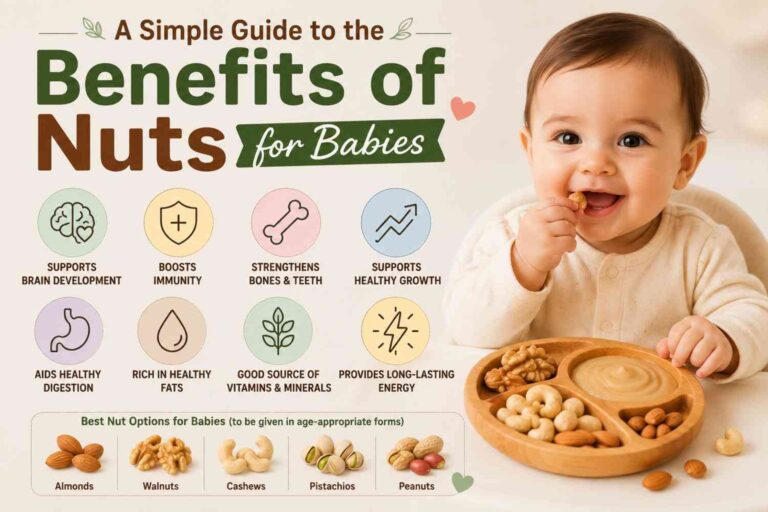
Introducing solid foods is an exciting stage for both parents and babies. Many parents wonder whether nuts are safe, when they should be introduced, and what benefits they offer. For years, families were advised to delay giving nuts to young children, but current recommendations from many paediatric experts suggest that introducing nuts in safe forms at the appropriate age may be beneficial for most babies.
Understanding the benefits of nuts for babies helps parents make informed feeding choices. Nuts contain healthy fats, plant protein, vitamins, and minerals that support normal growth and development. The key is introducing them safely, in age-appropriate forms, and watching for any signs of allergies.
Nuts are packed with nutrients that growing children need. Even a small amount provides a combination of healthy fats, protein, fibre, and essential micronutrients.
Healthy fats are especially important during the first few years of life because a baby’s brain develops rapidly. Protein supports muscle growth and tissue repair, while vitamins and minerals contribute to healthy bones, immunity, and overall development.
Rather than replacing other healthy foods, nuts work best as part of a varied diet that includes fruits, vegetables, grains, dairy, and protein-rich foods.
Different nuts provide different nutritional benefits. Including a variety over time can help babies receive a wider range of nutrients.
Healthy unsaturated fats help support brain development and provide long-lasting energy. These fats are an important part of a balanced diet during infancy.
Protein helps build muscles, skin, and body tissues. It also supports healthy growth throughout childhood.
As babies begin eating more solid foods, fibre can help support healthy digestion when combined with enough fluids and a balanced diet.
Many nuts naturally contain:
These nutrients play different roles in supporting bones, immunity, nerve function, and healthy growth.
Healthy fats found in nuts are among their greatest nutritional strengths. During infancy, the brain develops quickly, making dietary fats an important part of normal development.
Adding small amounts of nut butter or finely ground nuts to suitable foods can contribute valuable nutrients without requiring large portions.
Some babies need nutrient-dense foods as they become more active. Nuts naturally provide concentrated nutrition in small servings, making them useful additions to balanced meals.
This does not mean babies should eat large quantities. Small portions are enough because nuts are naturally filling.
Families following vegetarian eating patterns often look for different protein sources. Nuts can contribute plant protein alongside foods like lentils, beans, yogurt, cheese, and eggs, depending on the family’s dietary choices.
Several nuts contain minerals such as magnesium and phosphorus that help support healthy bones and teeth.
When combined with calcium-rich foods and adequate vitamin D, these nutrients contribute to normal bone development.
Introducing different Flavors and textures during infancy can help babies become familiar with a wider variety of foods.
Offering different nut butters or ground nuts mixed into suitable foods may encourage acceptance of nutritious foods as children grow.
Many paediatric health organizations now recommend introducing common allergenic foods, including peanuts and tree nuts, around six months of age when babies are developmentally ready for solid foods. However, every child is different.
Parents should discuss introduction with their paediatrician if the baby has:
Whole nuts should never be given to babies because they create a choking hazard.
As babies grow and tolerate different foods, parents may introduce a variety of nuts in safe forms.
Almonds provide vitamin E, healthy fats, calcium, and magnesium. Smooth almond butter or finely ground almonds work well for babies.
Walnuts contain beneficial fats that support overall nutrition. Their mild flavour blends easily into oatmeal or mashed fruit.
Cashews provide iron, zinc, magnesium, and protein. Smooth cashew butter can be mixed into purees.
Pistachios offer protein, fibre, and several vitamins and minerals. Finely ground pistachios may be added to suitable foods once tolerated.
Although technically legumes, peanuts are often grouped with nuts because of their nutritional profile. Smooth peanut butter is a common first introduction.
Several mistakes can reduce safety during nut introduction.
Avoid giving:
Introducing one new food at a time makes it easier to identify any reactions.
There is no single rule that fits every child.
Once a baby safely tolerates nuts, they can be included regularly as part of a balanced diet. Small servings are generally enough because nuts are naturally rich in nutrients.
Offering different varieties over time helps provide nutritional diversity while exposing babies to different tastes.
The benefits of nuts for babies extend far beyond simple nutrition. They provide healthy fats, protein, vitamins, and minerals that support growth, brain development, and overall health. Introducing nuts at the appropriate age, using safe textures such as smooth nut butters or finely ground nuts, allows babies to enjoy these nutritional advantages while reducing choking risks.
Every child develops differently, so parents should introduce new foods gradually and seek guidance from their paediatrician if allergies or other concerns exist. With thoughtful preparation and age-appropriate serving methods, nuts can become a valuable part of a baby’s balanced and varied diet.
1. When can babies eat nuts?
Babies can usually try nuts from around 6 months, but only in safe forms like smooth nut butter or finely ground nuts.
2. Can babies eat whole nuts?
No. Whole nuts are not safe for babies because they can cause choking.
3. Which nuts are good for babies?
Almonds, walnuts, cashews, pistachios, and peanuts are good choices when served safely.
4. How do I introduce nuts to my baby?
Mix a small amount of smooth nut butter or ground nuts into foods your baby already eats.
5. What should I do if my baby has a nut allergy?
Stop giving the nut and contact your doctor if you notice any signs of an allergic reaction.
6. Can babies eat nuts every day?
Yes, once they are introduced safely and your baby tolerates them well, small amounts can be part of a balanced diet.
7. Why should babies eat nuts?
Nuts provide healthy fats, protein, and important nutrients that support healthy growth and development.
All products are guaranteed to arrive in perfect condition at the specified shipping address provided. If you are not completely satisfied with the quality of your order upon arrival, please contact info@primenut.ae within 48 hours of order receipt, with a detailed description and photograph(s), for a replacement or exchange claim. Due to the perishable nature of our products, all requests submitted without proper supporting documents will not be eligible for re-shipment. Primenut reserves the right to limit replacements.
Primenut is not responsible for failed deliveries when:
An incorrect or outdated address is provided The recipient is not available An amended/new delivery address is not provided within 24 hours of the first delivery attempt Orders that are returned or diverted due to incorrect addresses, will be subject to additional charges based on the courier in the destination country.
All replacement requests must be made within 48 hours of order receipt, by contacting our customer care team at customercare@bateel.com Once the request has been received and approved, the replacement item(s) will be shipped within 2-5 working days. In case a replacement is not possible, a refund will be issued through the original payment method. Refunds can take from 10 to 30 working days to be reflected in your account. For a replacement or refund to be issued, at least one of the following conditions must apply:
The product has been damaged during delivery The product is defective or out of date The incorrect product was shipped
Primenut utilizes priority shipping to deliver your order within 2-5 working days. All orders are processed within 24 hours of order acceptance (Monday to Saturday, excluding holidays). You will receive a Shipment Confirmation email once your order has shipped containing your tracking number(s).
Primenut has a variable shipping fee depending on the delivery destination and size of the order. To find out exact shipping costs, please add your desired items into the cart and indicate delivery address to your basket. The final shipping fee will be calculated at the checkout.
Orders may be subject to import duties, VAT, taxes and customs clearance charges of the destination country. These additional charges, if any, are the sole responsibility of the customer. Primenut cannot be held accountable for charges incurred during the delivery of your order/package. Delivery delays may occur if your package is selected for inspection by your country’s Customs Department or Agency. In case of any exchange/cancellation queries, kindly go through our Returns & Refunds page. For multiple delivery enquiries, kindly send an email to info@primenut.ae