


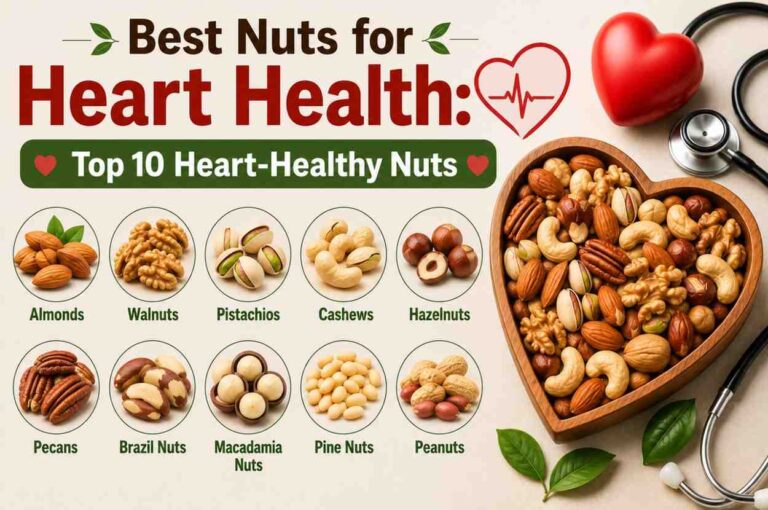
Heart health is shaped by everyday habits, and the food choices you make can have a lasting impact. While no single food can prevent heart disease, certain foods provide nutrients that support normal heart function. Nuts are one of those foods. They are naturally rich in healthy fats, plant protein, fibre, vitamins, minerals, and antioxidants, making them a smart addition to a balanced diet.
If you’ve ever wondered about the best nuts for heart health, you’re not alone. Some nuts contain higher amounts of heart-friendly unsaturated fats, while others stand out for their fibre, magnesium, or antioxidant content. The good news is that each variety offers something unique. Instead of relying on one type, enjoying a mix of nuts in moderation can help you benefit from their different nutrients.
For years, nuts were avoided by some people because they are high in fat. Today, nutrition experts look beyond the total fat content and focus on the type of fat they contain. Most nuts are naturally rich in unsaturated fats, which are considered healthier than saturated fats when eaten as part of a balanced diet.
Nuts also provide plant-based protein, dietary fibre, vitamin E, magnesium, potassium, and naturally occurring antioxidants. Together, these nutrients contribute to overall cardiovascular wellness and support a healthy lifestyle.
Choosing unsalted and minimally processed nuts is generally the best option for people looking after their heart health.
Walnuts are often considered one of the best nuts for heart health because they contain alpha-linolenic acid (ALA), a plant-based omega-3 fatty acid. In addition to healthy fats, walnuts provide antioxidants, copper, and magnesium. Their slightly earthy flavour makes them easy to add to salads, oatmeal, yogurt, or homemade trail mixes.
Almonds are a popular everyday snack for good reason. They contain vitamin E, magnesium, fibre, and healthy monounsaturated fats. Their satisfying crunch makes them a practical choice for replacing processed snacks. Almonds can also be sliced into breakfast cereals or blended into smoothies.
Pistachios combine healthy fats with protein and fibre, helping create a filling snack. They also provide potassium, vitamin B6, and antioxidants. Eating pistachios in their shells may naturally encourage slower eating, helping with portion awareness.
Cashews have a creamy texture and provide healthy fats along with minerals such as magnesium, zinc, and copper. They blend well into sauces, soups, and homemade spreads, offering a nutritious alternative to some processed ingredients.
Pecans contain monounsaturated fats along with antioxidants that help protect cells from oxidative stress. Their naturally rich flavour works well in oatmeal, yogurt, salads, or baked dishes without needing extra sugar.
Hazelnuts provide vitamin E, healthy fats, manganese, and fibre. Their mild sweetness makes them enjoyable in homemade granola, breakfast bowls, or mixed with dried fruits for a wholesome snack.
Brazil nuts are best known for their exceptionally high selenium content. Selenium supports several important body functions, including antioxidant activity. Since Brazil nuts contain very high amounts of selenium, only one or two nuts are generally enough to meet daily needs.
Macadamia nuts contain mostly monounsaturated fats; the same type of fat commonly associated with olive oil. Their buttery flavour makes them an enjoyable occasional snack or ingredient in homemade recipes.
Although technically legumes, peanuts are nutritionally similar to tree nuts. They provide protein, healthy fats, niacin, and magnesium. Natural peanut butter without added sugar or hydrogenated oils is another convenient way to enjoy these nutrients.
Pine nuts are small but nutrient-dense. They provide healthy fats, vitamin E, and magnesium. They are commonly used in pesto, salads, roasted vegetables, and whole-grain dishes.
The best nuts for heart health share several important nutrients.
Healthy Unsaturated Fats
Adding nuts to meals doesn’t have to be complicated.
Some simple ideas include:
These small additions can improve both nutrition and flavour without requiring major dietary changes.
Even the best nuts for heart health are calorie-dense, so portion size matters.
A small handful, roughly 28 grams (about one ounce), is commonly recommended as a serving. This amount provides beneficial nutrients without adding excessive calories.
Eating nuts regularly in moderate portions works better than consuming large amounts occasionally.
Not every packaged nut product offers the same nutritional value.
When shopping, look for:
Flavoured nuts coated in sugar, chocolate, or excessive salt may reduce some of the health advantages.
Choosing the best nuts for heart health is less about finding one perfect nut and more about enjoying a variety of nutrient-rich options. Walnuts, almonds, pistachios, cashews, pecans, hazelnuts, Brazil nuts, macadamia nuts, peanuts, and pine nuts each offer unique nutritional benefits that support a balanced diet.
By choosing unsalted, minimally processed nuts and eating them in moderate portions, you can enjoy their healthy fats, fibre, protein, vitamins, and minerals as part of an overall heart-conscious lifestyle. Combined with regular exercise and other healthy eating habits, nuts remain one of the simplest and most nutritious foods you can include in your daily routine.
All products are guaranteed to arrive in perfect condition at the specified shipping address provided. If you are not completely satisfied with the quality of your order upon arrival, please contact info@primenut.ae within 48 hours of order receipt, with a detailed description and photograph(s), for a replacement or exchange claim. Due to the perishable nature of our products, all requests submitted without proper supporting documents will not be eligible for re-shipment. Primenut reserves the right to limit replacements.
Primenut is not responsible for failed deliveries when:
An incorrect or outdated address is provided The recipient is not available An amended/new delivery address is not provided within 24 hours of the first delivery attempt Orders that are returned or diverted due to incorrect addresses, will be subject to additional charges based on the courier in the destination country.
All replacement requests must be made within 48 hours of order receipt, by contacting our customer care team at customercare@bateel.com Once the request has been received and approved, the replacement item(s) will be shipped within 2-5 working days. In case a replacement is not possible, a refund will be issued through the original payment method. Refunds can take from 10 to 30 working days to be reflected in your account. For a replacement or refund to be issued, at least one of the following conditions must apply:
The product has been damaged during delivery The product is defective or out of date The incorrect product was shipped
Primenut utilizes priority shipping to deliver your order within 2-5 working days. All orders are processed within 24 hours of order acceptance (Monday to Saturday, excluding holidays). You will receive a Shipment Confirmation email once your order has shipped containing your tracking number(s).
Primenut has a variable shipping fee depending on the delivery destination and size of the order. To find out exact shipping costs, please add your desired items into the cart and indicate delivery address to your basket. The final shipping fee will be calculated at the checkout.
Orders may be subject to import duties, VAT, taxes and customs clearance charges of the destination country. These additional charges, if any, are the sole responsibility of the customer. Primenut cannot be held accountable for charges incurred during the delivery of your order/package. Delivery delays may occur if your package is selected for inspection by your country’s Customs Department or Agency. In case of any exchange/cancellation queries, kindly go through our Returns & Refunds page. For multiple delivery enquiries, kindly send an email to info@primenut.ae