


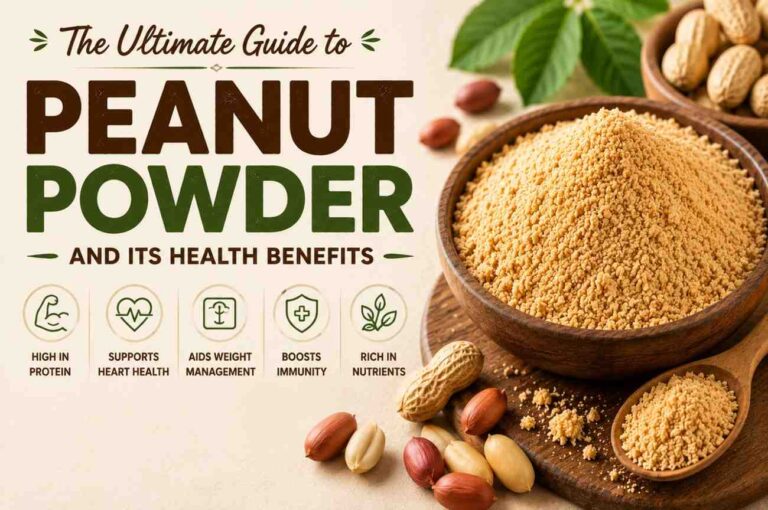
Peanut powder has become a popular pantry ingredient for people who enjoy the flavour of peanuts but want a more flexible way to use them in everyday meals. It mixes easily into smoothies, yoghurt, oatmeal, sauces, and baked recipes without changing their texture too much. Because it stores well and is simple to measure, many home cooks keep it on hand for both sweet and savoury dishes.
Although peanut powder has gained attention in recent years, it isn’t a new food. It is made from roasted peanuts that have been pressed to remove most of their natural oil before being ground into a fine powder. This process allows the powder to retain the rich flavour of peanuts while containing less fat than traditional peanut butter. For people who enjoy the taste of peanuts in smoothies, baking, sauces, or everyday recipes, peanut powder offers a convenient and versatile option.
If you’re curious about how peanut powder fits into a balanced diet, this guide explains what it is, how it’s made, its nutritional value, and the health benefits that make it a practical choice for many people.
Peanut powder is produced by roasting peanuts, pressing out much of their natural oil, and grinding the remaining peanut solids into a fine powder. Since part of the oil has been removed, the powder is lower in fat than regular peanut butter while still retaining much of the peanut flavour.
Some peanut powders contain only peanuts, while others may include small amounts of salt, sugar, or flavouring ingredients. Reading the ingredient list before buying is a simple way to choose a product that matches your preferences.
One reason peanut powder has become popular is its versatility. It can be mixed with water to create a spread, stirred into drinks, or added directly to recipes without making them overly oily.
Although the exact nutritional values vary between brands, peanut powder generally provides a good balance of nutrients in a relatively small serving.
It commonly contains:
Because much of the natural oil is removed during processing, peanut powder usually contains fewer calories from fat than traditional peanut butter. That makes it an appealing option for people who want the taste of peanuts in recipes while managing overall fat intake.
It’s still worth checking the nutrition label, as different manufacturers use slightly different production methods and ingredients.
One reason many people add peanut powder to their meals is its protein content. Protein plays an important role in building and maintaining muscles while also helping keep meals satisfying.
Adding a spoonful of peanut powder to a morning smoothie or bowl of oats is an easy way to increase protein without making major changes to your diet. Since it blends smoothly, it also works well in recipes where whole peanuts might change the texture.
For people with busy schedules, it offers a practical way to include more plant-based protein in everyday meals.
Peanut butter naturally contains healthy fats, but because peanut powder has much of its oil removed during processing, it contains less fat per serving.
That doesn’t necessarily make one product better than the other. They simply serve different purposes.
Someone looking for a creamy sandwich spread may prefer peanut butter, while another person preparing smoothies or baking recipes might choose peanut powder because it mixes easily without adding as much fat.
Choosing between the two often comes down to personal preference and how you plan to use them.
One of the biggest advantages of peanut powder is how easily it fits into different meals.
Many people stir it into:
It can also be used in savoury recipes by mixing it into sauces, marinades, or salad dressings. Since it dissolves quickly, it adds peanut flavour without creating a heavy texture.
Healthy eating doesn’t have to mean eating the same foods every day. Peanut powder offers another way to enjoy peanuts while experimenting with different recipes.
Some people prefer sprinkling it over fruit, while others blend it into homemade desserts or breakfast bowls. It can even be mixed into soups or Asian-inspired sauces to create a richer flavour.
Having different ways to enjoy nutritious foods often makes it easier to maintain balanced eating habits over time.
People with busy schedules often look for foods that are both nutritious and convenient. Peanut powder fits easily into that routine because it takes only a few seconds to use. Simply add a spoonful to a smoothie, mix it into porridge, or stir it into yoghurt for extra flavour and protein.
Since it blends quickly and stores well in the pantry, peanut powder is a practical ingredient for meal preparation. It is especially useful for those who prefer simple recipes that do not require much time or effort.
Protein is essential for maintaining normal muscle function and repairing body tissues. Peanut powder contains plant-based protein that can contribute to your daily protein intake when combined with other nutritious foods.
While it should not replace complete meals, peanut powder can be part of balanced snacks before or after daily activities or exercise. Combining it with milk, yoghurt, or oats creates a more satisfying snack that provides both protein and carbohydrates.
One reason peanut powder continues to grow in popularity is its flexibility. Unlike many ingredients that are limited to specific recipes, peanut powder works well at almost any time of day.
You can enjoy it by:
Having different ways to enjoy peanut powder makes it easier to include it regularly without becoming repetitive.
Peanut powder can be enjoyed by many people as part of a balanced diet.
It may be suitable for:
People with a peanut allergy should avoid peanut powder completely. If you have dietary restrictions or medical conditions, consult a healthcare professional before making significant changes to your diet.
There is no single serving that suits everyone. The right amount depends on your age, activity level, overall diet, and nutritional needs.
For most healthy adults, about 2 tablespoons (approximately 12–16 grams) is a common serving used in smoothies, yoghurt, or recipes. If peanut powder is one of several protein sources in your daily diet, this amount is generally enough to add flavour and nutrition without making meals overly heavy.
Rather than focusing on one food, aim for variety by combining peanut powder with fruits, vegetables, whole grains, and other protein-rich foods as part of a balanced eating pattern.
Peanut powder is a versatile ingredient that offers the familiar taste of peanuts in a form that is easy to mix, store, and use in everyday recipes. Whether stirred into smoothies, added to breakfast bowls, blended into sauces, or used in baking, it provides a convenient way to enjoy plant-based protein and other valuable nutrients.
While peanut powder and peanut butter each have their own place in the kitchen, understanding how they differ can help you choose the one that best suits your meals and preferences. By selecting quality products, following appropriate serving sizes, and including peanut powder as part of a varied and balanced diet, you can enjoy its flavour and nutritional benefits in many simple and enjoyable ways.
1. Is peanut powder healthier than peanut butter?
Both can be part of a healthy diet. Peanut powder generally contains less fat because much of the natural oil is removed, while peanut butter retains more of its healthy fats.
2. Can peanut powder replace peanut butter?
It depends on how you plan to use it. Peanut powder works well in drinks, baking, and cooking, while peanut butter is usually preferred as a spread.
3. Does peanut powder contain protein?
Yes. Peanut powder naturally provides plant-based protein, making it a convenient ingredient for smoothies, breakfast bowls, and snacks.
4. Can peanut powder be mixed with water?
Yes. Many people mix peanut powder with water to create a spread that resembles peanut butter.
5. How should peanut powder be stored?
Keep it tightly sealed in a cool, dry place. Always follow the storage instructions provided by the manufacturer.
6. Is peanut powder suitable for baking?
Yes. Peanut powder blends easily into cakes, muffins, cookies, pancakes, and homemade energy bites without making recipes overly oily.
7.Who should avoid peanut powder?
Anyone with a peanut allergy should avoid peanut powder and foods containing peanuts. If you have concerns about allergies or special dietary needs, seek advice from a qualified healthcare professional.
All products are guaranteed to arrive in perfect condition at the specified shipping address provided. If you are not completely satisfied with the quality of your order upon arrival, please contact info@primenut.ae within 48 hours of order receipt, with a detailed description and photograph(s), for a replacement or exchange claim. Due to the perishable nature of our products, all requests submitted without proper supporting documents will not be eligible for re-shipment. Primenut reserves the right to limit replacements.
Primenut is not responsible for failed deliveries when:
An incorrect or outdated address is provided The recipient is not available An amended/new delivery address is not provided within 24 hours of the first delivery attempt Orders that are returned or diverted due to incorrect addresses, will be subject to additional charges based on the courier in the destination country.
All replacement requests must be made within 48 hours of order receipt, by contacting our customer care team at customercare@bateel.com Once the request has been received and approved, the replacement item(s) will be shipped within 2-5 working days. In case a replacement is not possible, a refund will be issued through the original payment method. Refunds can take from 10 to 30 working days to be reflected in your account. For a replacement or refund to be issued, at least one of the following conditions must apply:
The product has been damaged during delivery The product is defective or out of date The incorrect product was shipped
Primenut utilizes priority shipping to deliver your order within 2-5 working days. All orders are processed within 24 hours of order acceptance (Monday to Saturday, excluding holidays). You will receive a Shipment Confirmation email once your order has shipped containing your tracking number(s).
Primenut has a variable shipping fee depending on the delivery destination and size of the order. To find out exact shipping costs, please add your desired items into the cart and indicate delivery address to your basket. The final shipping fee will be calculated at the checkout.
Orders may be subject to import duties, VAT, taxes and customs clearance charges of the destination country. These additional charges, if any, are the sole responsibility of the customer. Primenut cannot be held accountable for charges incurred during the delivery of your order/package. Delivery delays may occur if your package is selected for inspection by your country’s Customs Department or Agency. In case of any exchange/cancellation queries, kindly go through our Returns & Refunds page. For multiple delivery enquiries, kindly send an email to info@primenut.ae